
Can a Florida Bankruptcy Attorney Stop Wage Garnishment Immediately?
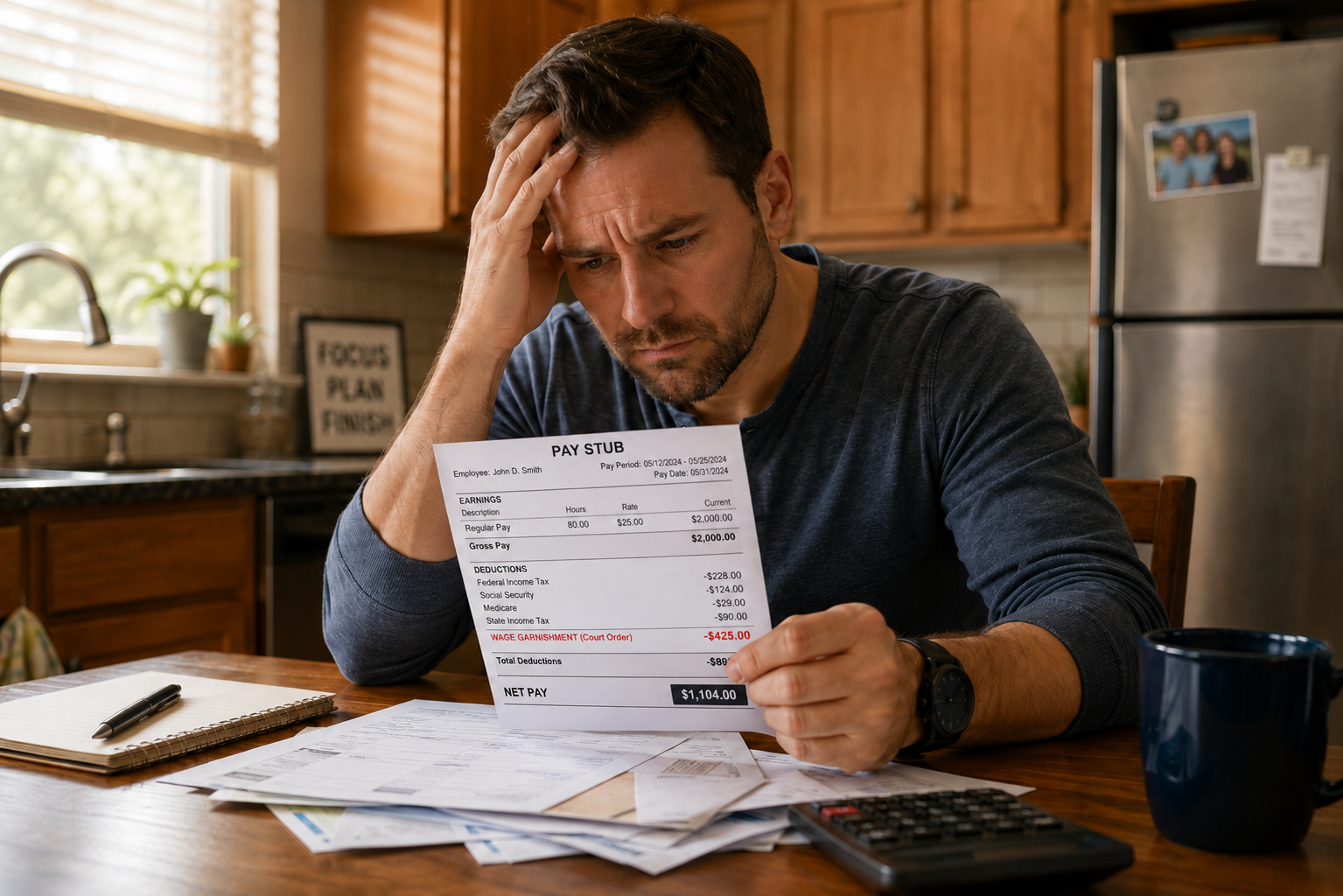
Yes, a Florida bankruptcy attorney can stop wage garnishment almost immediately after filing. The moment a bankruptcy case is filed, federal law triggers something called the automatic stay, which legally forces most creditors, including wage garnishors, to stop all collection activity. For many people in Hernando County and the Spring Hill area, this single legal protection changes everything.
If a creditor is currently taking money out of your paycheck, you likely feel it every pay period. The math gets brutal fast. Between rent, utilities, and basic groceries, losing 25% of your disposable income to a garnishment can tip a household budget into crisis. Depending on the circumstances and applicable exemptions, wage garnishment can place significant strain on a household budget. The good news: you may have a legal path to stop it today.
How the Automatic Stay Stops Wage Garnishment in Florida
When a Florida bankruptcy attorney files your case, the federal bankruptcy court issues an automatic stay under 11 U.S.C. Section 362. This is not a request or a negotiation. It is a federal court order that takes effect the instant your petition hits the court's electronic filing system.
Here is what that means in practical terms:
- Creditors must stop immediately. Any creditor continuing to garnish wages after the automatic stay is in place is violating federal law.
- Your employer gets notified. Your attorney sends notice to your employer's payroll or HR department so the garnishment stops at the next pay cycle, sometimes even mid-cycle if the timing works in your favor.
- It covers most garnishments. Credit card debts, medical bills, personal loans, repossession deficiency balances, and most civil judgments are covered. Child support and alimony garnishments are generally not stopped by the automatic stay.
- The protection is nationwide. Whether the judgment was entered in Hernando County, Citrus County, or anywhere else in the country, the federal automatic stay reaches it.
The speed here matters. If your attorney files your bankruptcy petition on a Thursday afternoon, the stay is in place Thursday afternoon. Not next week. Not after a court hearing. Right then.
What Types of Garnishment the Automatic Stay Covers
Not every garnishment is treated the same under bankruptcy law. Knowing which debts qualify matters before you file.
- Consumer debt judgments (credit cards, medical bills, personal loans): fully covered
- Bank account levies tied to civil judgments: covered by the stay
- Wage garnishments from private creditors: covered
- IRS tax levies: partially covered, with some nuances depending on the chapter filed
- Child support and alimony: not covered by the automatic stay
- Student loans in garnishment: the stay pauses collection, though dischargeability is a separate question
If you are not sure which category your garnishment falls into, that is exactly the kind of question worth bringing to Peck Law Firm, P.A. in a free consultation.
Chapter 7 vs. Chapter 13: Which Stops Garnishment Faster?
Both Chapter 7 and Chapter 13 trigger the automatic stay at filing, so the immediate protection is the same. The difference is what happens afterward.
- Chapter 7 eliminates most unsecured debts entirely. Once the discharge is entered, typically within three to six months, the underlying debt that created the garnishment no longer exists. The creditor has nothing left to collect.
- Chapter 13 sets up a three-to-five year repayment plan. The garnishment stops the moment you file, and you repay a portion of what you owe through the plan rather than through paycheck deductions. This option often works better for people who have fallen behind on a mortgage and want to keep their home.
Attorney Rick Peck, Richard K. Peck, IV, can review your specific debt picture and help you understand which chapter gives you the strongest long-term position, not just the fastest short-term fix.
What Florida Law Adds on Top of Federal Bankruptcy Protections
Florida has its own consumer protection layer that works alongside federal bankruptcy law. The Florida Consumer Collection Practices Act (FCCPA) governs how debt collectors can behave in this state, and it has teeth.
Under the FCCPA, creditors and debt collectors who continue collection activity, including wage garnishment, after being properly notified of a bankruptcy filing can face:
- Actual damages for any financial harm caused
- Statutory damages up to $1,000 per violation may be available under applicable law, along with actual damages and attorney's fees in appropriate cases
- Attorney's fees paid by the violating creditor
This means that if a creditor ignores the automatic stay and keeps garnishing your wages, that violation itself may entitle you to compensation. Your bankruptcy attorney can file a motion for sanctions in the bankruptcy court and potentially pursue a separate FCCPA claim.
For Florida residents in Hernando or Citrus County, this combination of federal and state protection is meaningful. You are not just passively hoping a creditor stops. You have real legal tools to enforce your rights and hold violators accountable.
When a Creditor Keeps Garnishing After You File
It does happen. Payroll departments sometimes miss the notice. Creditors occasionally test the limits. Here is what you should do if the garnishment does not stop after filing:
- Contact your attorney immediately. Do not wait. Document every paycheck where garnishment continued after your filing date.
- Keep your pay stubs. These become evidence if your attorney needs to file for sanctions.
- Your attorney files an emergency motion. The bankruptcy court can order the creditor to return any money taken after the stay went into effect. That money can come back to you.
- The creditor faces penalties. Courts take automatic stay violations seriously. Creditors who willfully continue garnishment risk significant court-ordered penalties.
Peck Law Firm has helped Spring Hill and Hernando County residents navigate exactly these situations. If a creditor is ignoring the stay, the firm can act fast to enforce your rights in the U.S. Bankruptcy Court for the Middle District of Florida.
Frequently Asked Questions About Stopping Wage Garnishment in Florida
How fast does bankruptcy stop wage garnishment in Florida?
The automatic stay takes effect the moment your bankruptcy petition is filed with the court. Your attorney then notifies your employer. In most cases, the garnishment stops within one to two pay cycles, sometimes faster if your attorney acts quickly and your employer processes the notice promptly.
Can I stop a wage garnishment in Florida without filing bankruptcy?
Possibly, depending on the situation. Florida offers some exemptions, and certain procedural challenges can delay or reduce a garnishment. However, these options are limited and do not provide the broad, immediate protection that bankruptcy's automatic stay does. If the debt is large and the judgment is already entered, bankruptcy is often the most reliable path to a complete stop.
What if I have already had a bankruptcy case dismissed? Will the automatic stay still apply?
This is a critical question. If you filed a bankruptcy case that was dismissed within the previous year, the automatic stay in a new case may only last 30 days automatically, or may not apply at all in some situations. Your attorney needs to know about any prior filings. Peck Law Firm evaluates each client's full filing history before recommending a strategy.
Does bankruptcy stop garnishment on student loan debts?
The automatic stay pauses student loan garnishment when you file, but student loans are generally not dischargeable in bankruptcy without proving undue hardship, which requires a separate legal proceeding. The stay gives you temporary relief, but your attorney should discuss long-term options for your specific loan situation.
Will my employer know I filed for bankruptcy?
Your employer will receive a notice to stop the garnishment, so they will learn about the bankruptcy filing. However, federal law prohibits most government and private employers from firing or discriminating against an employee solely because they filed for bankruptcy, under 11 U.S.C. Section 525. Your rights are protected.
Talk to a Florida Bankruptcy Attorney at Peck Law Firm Today
Wage garnishment does not wait. Every paycheck that passes is money you cannot get back, money your family may need right now. If a creditor has a judgment against you and is taking from your wages, the window to act is open right now.
Peck Law Firm, P.A. serves residents throughout Hernando County, Citrus County, Spring Hill, and the surrounding areas. Attorney Richard K. Peck, IV brings real experience in bankruptcy, foreclosure defense, debt collection harassment, and personal injury representation, all focused on helping everyday Floridians get back on solid ground.
A free, confidential consultation costs you nothing and could stop a garnishment faster than you expect.
Call Peck Law Firm, P.A. at (352) 835-7977 or visit pecklawfirmfl.com to schedule your free consultation today.
You can also learn more about Attorney Richard K. Peck, IV on the attorney bio page and explore related educational content on the firm's video resources page.
This article is provided for informational and educational purposes only and does not constitute legal advice. Bankruptcy laws and outcomes vary depending on the facts and circumstances of each case. Reading this article does not create an attorney-client relationship with Peck Law Firm, P.A. Results and timelines may vary based on the facts of each case and applicable law.
Start Protecting Yourself Now